
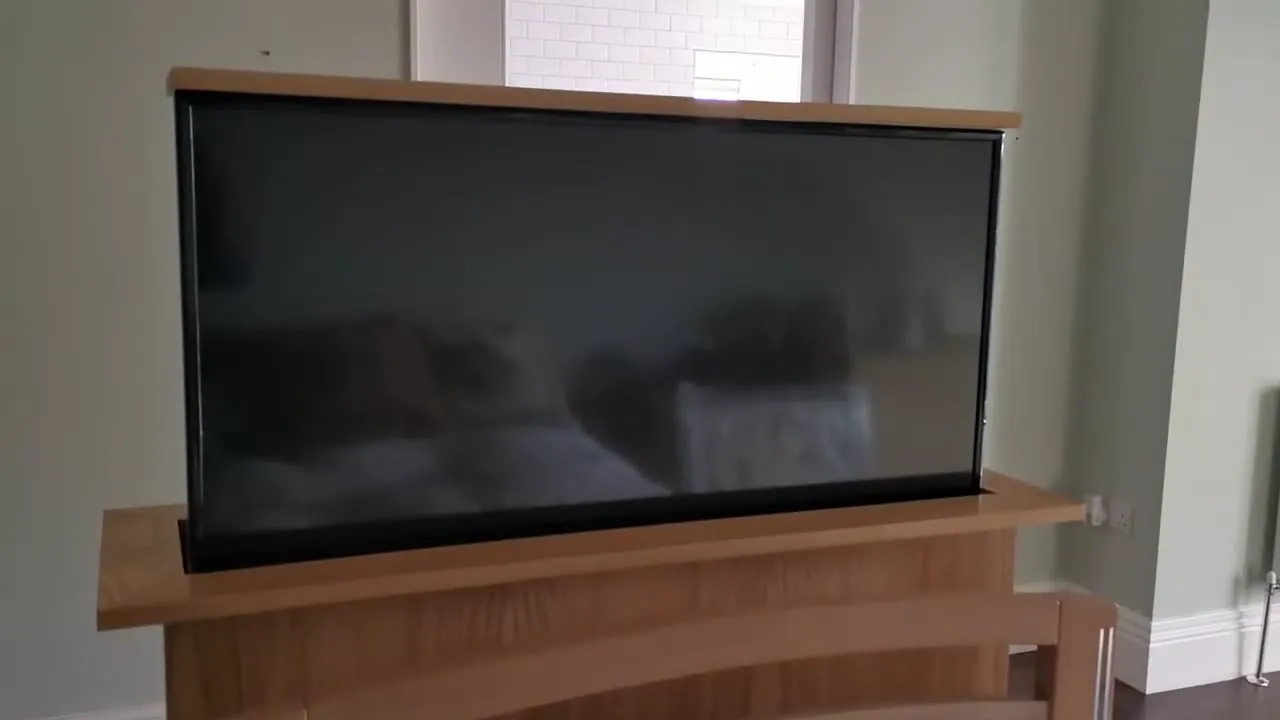
A television at the foot of the bed.
The plan had always been for the client's bedroom television to sit at the end of the bed, where he wanted it. The bedroom also has a ceiling-track hoist that carries him in a harness from the bed through to his wet room.
Spotted when the hoist tracks went in.
The clash only became clear towards the end of the job, once the hoist company had installed the ceiling tracks. With a television in the planned position, there would have been about 500 mm between the top of the screen and the point where the harness attaches, right on the hoist's route.
That's a hard object in the path of a person being transferred. It's a risk to the client, a risk to whoever is operating the hoist, and a risk to the screen.
We raised it at a site meeting with the client's family, his occupational therapist, the architects and the builders. Not everyone saw it as a problem at first. The decision that came out of the meeting was clear, though: the television could not stay in the hoist's path, and lowering it out of the way was the right answer.
Make the screen disappear.
We designed a cabinet for the foot of the bed and had it made by a joiner. Inside it is a Future Automation motorised TV lift, so the television rises into the viewing position when it's needed and lowers fully into the cabinet when it isn't.
We started from the hoist route and worked back to the television, rather than the other way round. The hoist's clearance decided how far the screen needed to travel.
Nothing extra to remember.
The lift is tied into Control4, so nobody has to operate it separately. Turn the TV on and the lift raises it. Turn the TV off and it drops back into the cabinet, clearing the hoist route automatically.
The client keeps the viewing position he asked for, and the room still works safely for every transfer.